
Kotor sits at the innermost point of the Bay of Kotor, a fjord-like inlet on Montenegro’s Adriatic coast often (slightly inaccurately) called Europe’s southernmost fjord — it’s technically a submerged river canyon, but the dramatic limestone cliffs plunging straight into the water make the comparison understandable. The walled Old Town is a UNESCO World Heritage Site, a dense medieval core of Venetian and Byzantine-influenced architecture ringed by 4.5 kilometers of fortified walls that climb 260 meters up the mountainside behind the city. Montenegro remains considerably cheaper than neighboring Croatia despite delivering comparable coastline, and Kotor’s position — a single bay holding several historic towns within a short boat or drive — makes it one of the most efficient bases on the entire Adriatic. This Kotor travel guide covers the Old Town and city walls, the Bay of Kotor’s surrounding towns, food, day trips, and a full budget breakdown for 2026.
At a Glance
| Country | Montenegro |
| Currency | Euro (EUR), despite Montenegro not being an EU member |
| Language | Montenegrin; English and Italian common in tourist areas |
| Best time | May–June and September–October (warm, fewer cruise crowds) |
| Avoid | July–August (peak heat and heavy cruise ship traffic) |
| Daily budget (frugal) | $35–$60/day |
| Daily budget (comfortable) | $85–$180/day |
| Visa | Visa-free for 90 days for US, UK, Canadian, and EU passport holders |
| Getting there | Tivat Airport (TIV), 8 km away — direct flights from major European hubs in summer; or Dubrovnik Airport (1.5–2 hours by car, often cheaper flights) |
| Getting around | Walking, local buses, rental car for bay towns and day trips |
Kotor Old Town and the City Walls
The Old Town is a compact maze of marble-paved squares, Romanesque churches, and Venetian palazzo-style buildings packed inside walls first fortified in antiquity and substantially expanded under Venetian rule. The Cathedral of Saint Tryphon, consecrated in 1166, anchors the main square, while the smaller Church of Saint Luke sits a few streets over as one of the few buildings in the region to have hosted both Catholic and Orthodox services under the same roof during periods of religious coexistence.
The defining activity for any Kotor travel guide visit is the climb up the city walls to the Fortress of San Giovanni (Kotor Fortress), 1,350 steps that gain 260 meters in elevation and deliver a sweeping view down over the Old Town’s terracotta roofs and the full curve of the bay below. Entry costs €8 ($8.60) and the climb is best started early morning before the heat and cruise-ship crowds peak — water is essential, as there’s minimal shade for most of the ascent.
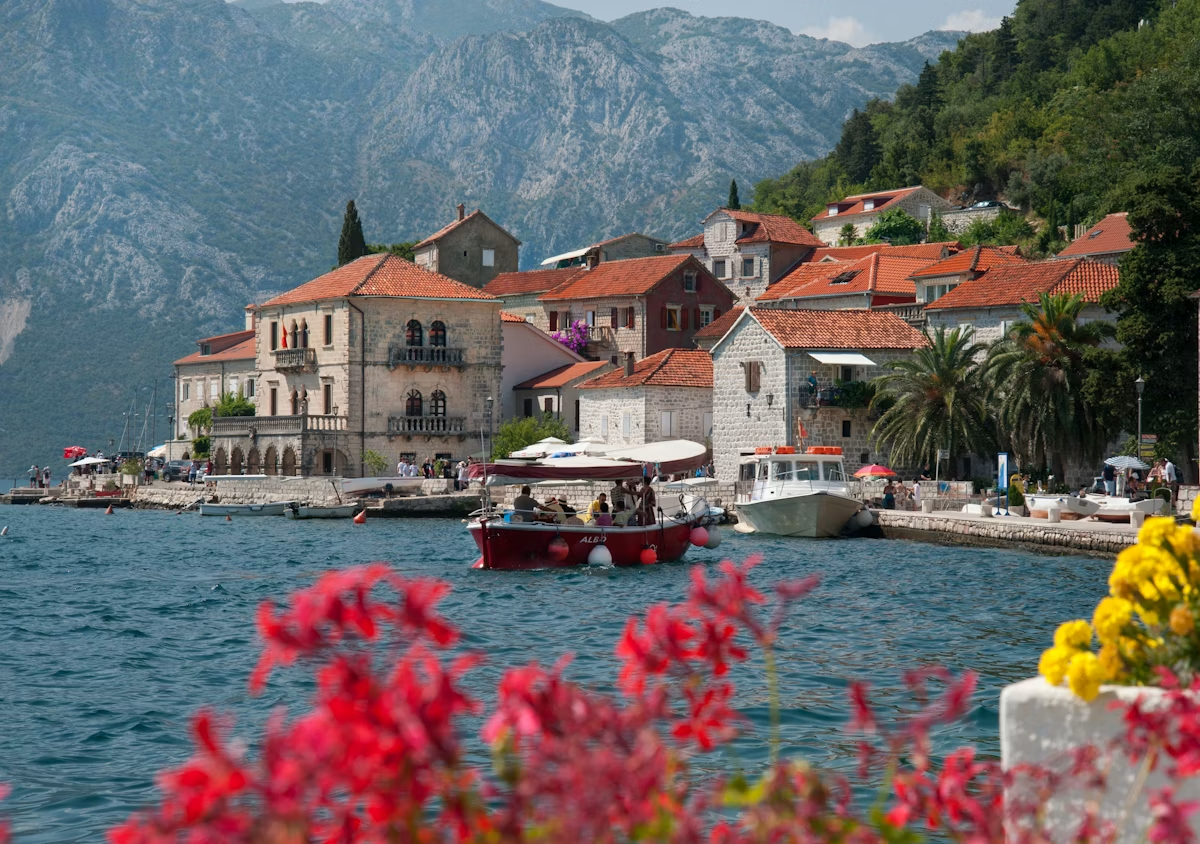
Photo by Evgeny Matveev on Unsplash
Exploring the Bay of Kotor
What makes a Kotor travel guide distinct from a typical single-city guide is the bay itself — several historic towns ring the water within a 20–40 minute drive or boat ride of Kotor, each worth a half-day visit.
Perast
A small Baroque town considered the bay’s most elegant settlement, built almost entirely by wealthy sea captains in the 17th and 18th centuries — its waterfront promenade and the Church of Our Lady of the Rocks (built on an artificial islet) are among the most photographed scenes in Montenegro.
Our Lady of the Rocks and St. George Islets
Two tiny islands just off Perast, one open to visitors (Our Lady of the Rocks, with a museum and chapel built up over centuries from rocks dropped by sailors fulfilling vows) and one closed (St. George, home to a monastery and cemetery). Boat taxis from Perast run €5–€10 ($5.40–$10.80) round trip.
Risan
The oldest town on the bay, home to Roman-era mosaic ruins from a 2nd-century villa — a quieter, less-visited stop for travelers wanting Roman history alongside the Venetian-era architecture found elsewhere around the bay.
Food in Kotor
Montenegrin coastal cuisine draws heavily on Italian and broader Mediterranean influence, layered with Balkan cooking traditions from the mountainous interior.
- Crni Rižot (Black Risotto): Squid-ink risotto, a signature dish of the entire Montenegrin and Croatian coast, found at nearly every seafood restaurant in the Old Town. €10–€16 ($10.80–$17.30)
- Njeguški Sir: A smoked cheese from the nearby village of Njeguši, typically served as part of a cured-meat-and-cheese starter plate alongside Njeguška Pršuta (smoked ham from the same village). €6–€10 ($6.50–$10.80)
- Kotor Mussels (Dagnje): Mussels farmed directly in the Bay of Kotor, served buzara-style (white wine, garlic, and tomato) — a defining dish of any Kotor travel guide food itinerary given how directly local the sourcing is. €8–€14 ($8.60–$15.10)
- Lignje na Žaru: Grilled whole squid, simply prepared with olive oil and garlic — a coastal staple available at most waterfront restaurants
- Krempita: A custard-and-puff-pastry dessert found across the former Yugoslav region, a common way to end a meal in Kotor’s Old Town cafés
Day Trips from Kotor
Dubrovnik, Croatia (1.5–2 hours by car)
Easily combined with Kotor as part of a broader Adriatic itinerary — many travelers base in one city and day-trip to the other, crossing the Montenegro–Croatia border without major delays outside peak summer hours.
Lovćen National Park and Njeguši (45 minutes by car)
A mountain national park home to the mausoleum of Montenegrin poet-prince Njegoš at the summit of Mount Jezerski, with sweeping views over the entire bay and coast — and a stop in Njeguši village for the smoked ham and cheese that share its name.
Budva (30–40 minutes by car or bus)
Montenegro’s main beach resort town, with its own walled old town and a livelier nightlife scene than Kotor — a popular half-day or overnight addition to any Kotor travel guide itinerary.
Where to Stay
Budget (€25–€45/night)
Guesthouses and apartments just outside the Old Town walls, often run by local families — the standard budget tier for visitors prioritizing proximity over luxury.
Mid-Range (€60–€120/night)
Boutique hotels inside the Old Town’s historic stone buildings, several with bay-facing rooms — the most atmospheric way to experience Kotor at night once the day-trip crowds clear out.
Upscale (€150–€350+/night)
Luxury resorts in nearby Tivat (including the Porto Montenegro marina development) or boutique five-star properties within the Old Town itself.
Getting Around Kotor
Walking: The Old Town is fully pedestrianized and small enough to cross in 10 minutes — walking is the only practical way to move within the walls.
Local buses: Connect Kotor to Tivat, Budva, and other bay towns at low cost, though schedules can be infrequent outside peak season.
Rental car: The most flexible option for exploring Perast, Risan, and Lovćen National Park independently — the coastal road around the bay is scenic but narrow, with heavy summer traffic near the Old Town.
Daily Budget Breakdown
| Category | Frugal | Comfortable |
|---|---|---|
| Accommodation | €20 | €85 |
| Food | €14 | €40 |
| Transport | €3 | €15 |
| Activities / entry fees | €6 | €18 |
| Daily Total | ~€43 / $46 | ~€158 / $171 |
Final Verdict: Kotor Travel Guide 2026
Kotor delivers an unusual combination for the price — a UNESCO walled Old Town, a genuinely dramatic natural setting, and direct access to several distinct historic towns scattered around a single bay, all at a noticeably lower cost than comparable Croatian destinations just across the border. The ideal Kotor travel guide itinerary runs three days: one full day for the Old Town and the city wall climb, a half-day boat or driving trip to Perast and Our Lady of the Rocks, and a final day split between Lovćen National Park and a Budva beach stop. Visitors should time their trip around the cruise ship schedule where possible — Kotor’s Old Town can feel overwhelmed by day-trippers when two or three ships dock simultaneously, and the difference between a crowded and a peaceful Old Town visit often comes down to nothing more than checking the day’s cruise arrivals in advance.