
Kuala Lumpur is one of Southeast Asia’s most underestimated cities for remote work — a capital with fiber internet in almost every café, an MRT-connected urban grid, one of the lowest costs of living among major Asian cities with a genuinely modern infrastructure, and a food culture so good that eating well is one of the cheapest things you can do here. Malaysia’s government launched the DE Rantau Digital Nomad Pass in 2022, providing a formal legal visa specifically for remote workers and freelancers — the first of its kind in Southeast Asia. The Petronas Twin Towers remain one of the most recognizable skylines on Earth, but for the Kuala Lumpur digital nomad, the more relevant landmarks are the coworking clusters in Bangsar and KLCC, the colonial café district of Chow Kit, and the expat-accessible grocery infrastructure of Mont Kiara. This Kuala Lumpur digital nomad guide covers the neighborhoods, coworking spaces, visa pathway, food culture, day trips, and monthly cost breakdown for making KL work as a remote base in 2026.
At a Glance
| Country | Malaysia |
| Currency | Malaysian Ringgit (MYR) — ~4.7 MYR per $1 USD |
| Language | Malay (official); English very widely spoken; Mandarin, Tamil also common |
| Best time | March–October (drier months); KL is equatorial — rain is possible year-round |
| Avoid | October–November (wetter months with more sustained rainfall) |
| Monthly budget (comfortable) | $1,200–$2,200/month |
| Monthly budget (frugal) | $750–$1,200/month |
| Visa | 90-day visa-free entry for US, EU, UK, Australian passport holders; DE Rantau Pass for 3–12 months |
| Internet | Excellent — fiber widely available; coworking spaces 100–500 Mbps standard |
| Airport | Kuala Lumpur International Airport (KLIA) — KLIA Ekspres train to city center: 28 minutes, MYR 55 ($11.70) |
Why Kuala Lumpur Digital Nomad Life Works in 2026
The Kuala Lumpur digital nomad case rests on a convergence of factors that most Southeast Asian cities cannot match simultaneously.
Cost: KL is one of the cheapest major cities in Asia for the quality of life it delivers. A furnished one-bedroom apartment in a central neighborhood runs MYR 1,500–2,500/month ($319–$532) — significantly less than Bangkok, Bali, or Singapore. Restaurant meals from MYR 8–25 ($1.70–$5.32) at local hawker stalls cover breakfast and lunch without budget strain.
Infrastructure: Malaysia’s digital infrastructure ranks among the best in Southeast Asia. Celcom, Maxis, and Digi offer 4G/5G coverage across greater KL, and fiber internet is widely available in condominiums and coworking spaces. Power reliability is high — extended outages are rare in the city center.
Multilingualism: English is a de facto working language in Malaysian professional environments, retail, and services. The Kuala Lumpur digital nomad faces no meaningful language barrier for daily life, medical care, or logistics.
DE Rantau Nomad Pass: Malaysia’s digital nomad visa, launched in 2022, is among the most practical in Southeast Asia — 3 months to 12 months of legal residence, renewable, with a minimum income threshold of $24,000/year. This converts the standard 90-day visa-free stay into a legal long-term residency option for qualifying remote workers.
Location: KL’s position as a regional hub means direct flights to Singapore (55 minutes), Bangkok (2 hours), Jakarta (2 hours), and Hong Kong (3.5 hours), making regional travel during longer stays straightforward.
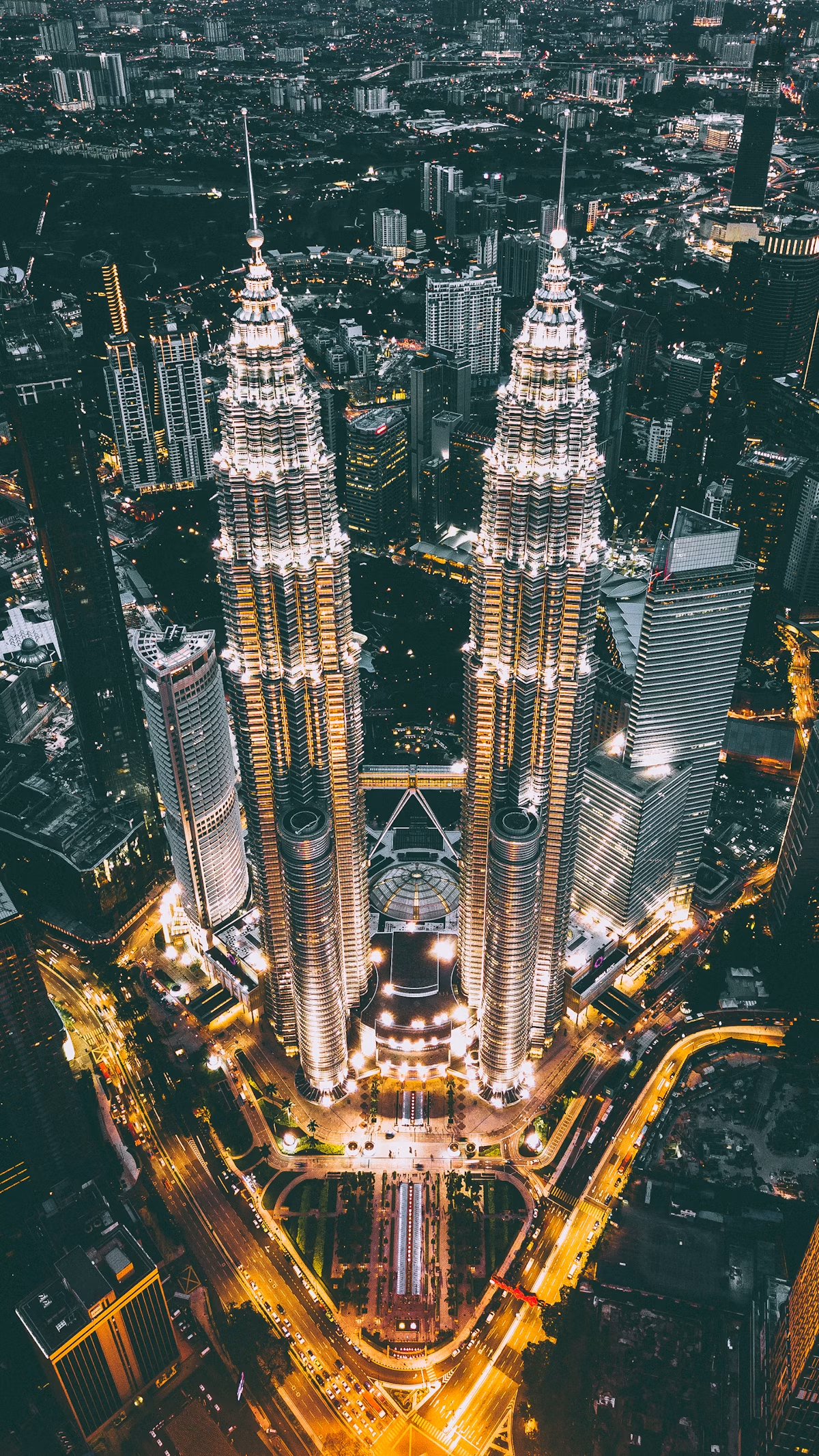
Photo by Izuddin Helmi Adnan on Unsplash
Best Neighborhoods for the Kuala Lumpur Digital Nomad
Bangsar — The Kuala Lumpur Digital Nomad Anchor
Bangsar is the neighborhood most consistently recommended in any Kuala Lumpur digital nomad guide — a residential area southwest of the city center with the best concentration of specialty cafés, coworking-friendly restaurants, quality supermarkets, and furnished apartment supply targeted at expatriates and long-stay visitors.
The neighborhood is well-connected by the Bangsar LRT station and has a walkable main strip (Telawi Street) with independent coffee shops, wine bars, and international restaurants that double as laptop-friendly working spaces. Bangsar Village and Bangsar Shopping Centre provide grocery and retail access without leaving the neighborhood.
- Furnished 1BR apartment: MYR 1,800–2,800/month ($383–$596)
- Best for: Kuala Lumpur digital nomad newcomers wanting a comfortable, English-friendly environment with excellent café culture
KLCC / Bukit Bintang — Central and Connected
The city-center districts around the Petronas Twin Towers (KLCC) and the shopping district of Bukit Bintang form KL’s highest-density working environment — the Suria KLCC mall, the Pavilion, and the surrounding office towers mean food, transit, and infrastructure are all within immediate reach.
Accommodation costs more here, and the working atmosphere in cafés is more corporate and transient. But the KLCC park, Aquaria KLCC, and the density of coworking spaces make this a reasonable base for short-to-medium stays.
- Furnished 1BR apartment: MYR 2,200–4,000/month ($468–$851)
- Best for: Business-adjacent Kuala Lumpur digital nomad residents, those prioritizing transit and city center access
Mont Kiara — The Long-Stay Expat Quarter
Mont Kiara is a planned residential development northwest of the city center that houses KL’s international school community, long-stay expats, and Korean, Japanese, and Western expatriate populations. The neighborhood has large condominiums with gym and pool, a well-stocked international supermarket circuit (Village Grocer, Isetan Grocery), and a cluster of international restaurants.
It is more suburban than Bangsar and requires more reliance on Grab (Malaysia’s Uber equivalent) for daily logistics, but the accommodation value at this price point is excellent.
- Furnished 1BR apartment: MYR 1,600–2,500/month ($340–$532)
- Best for: Families, long-stay Kuala Lumpur digital nomad residents prioritizing space, quiet, and expat community
Chow Kit / Masjid India — The Budget Option
Chow Kit is KL’s most atmospheric market district — a dense grid of wet markets, textile stalls, hawker food, and budget accommodation in the north of the city center. Accommodation here runs MYR 800–1,400/month ($170–$298) for furnished rooms, and the food culture is some of the most authentic in KL.
The tradeoff is infrastructure quality — street noise, less reliable building management, and fewer specialty cafés. But for the Kuala Lumpur digital nomad focused on budget and food experience over lifestyle polish, Chow Kit represents exceptional value.
- Furnished 1BR apartment: MYR 800–1,500/month ($170–$319)
- Best for: Budget-focused Kuala Lumpur digital nomad residents, food culture enthusiasts, short stays
Best Coworking Spaces in Kuala Lumpur
Common Ground (Multiple Locations)
Malaysia’s most established coworking network — Common Ground operates several locations across KL, including Bangsar South, TTDI, and Petaling Jaya. The spaces are design-forward with high ceilings, exposed concrete, excellent natural light, and consistently fast internet (200–500 Mbps). The community mix of Malaysian startups, freelancers, and international remote workers creates active networking.
- Price: MYR 450–700/month hot desk ($96–$149); day passes MYR 65–90 ($13.83–$19.15)
- Best for: Full-time Kuala Lumpur digital nomad workers, startup ecosystem access
Colony (KL City Centre / Eco City / Damansara)
Colony is a design-premium coworking space with private offices, event spaces, and a high-end café integrated into the working environment. The KLCC and Eco City locations are the most centrally convenient. Private offices have standing desks and soundproofing; the open coworking floors have phone booths and natural light.
- Price: MYR 500–850/month hot desk ($106–$181)
- Best for: Client-meeting-intensive Kuala Lumpur digital nomad residents, those wanting private office access
Worq (TTDI / Subang)
An affordable, community-focused coworking option with reliable fiber, good air conditioning, and flexible membership plans. Less polished than Common Ground or Colony but well-reviewed for the working environment and the active local community.
- Price: MYR 280–450/month hot desk ($60–$96); day pass MYR 45 ($9.57)
- Best for: Budget-conscious Kuala Lumpur digital nomad workers, flexible plans
Café Working Culture in KL
KL’s café culture is excellent for laptop workers — Malaysian café etiquette is tolerant of long working sessions, and the specialty coffee scene in Bangsar, Damansara, and TTDI provides reliable WiFi alongside excellent local coffee (white coffee, kopi tarik) from MYR 6–15 ($1.28–$3.19). Most mid-range cafés openly accommodate the Kuala Lumpur digital nomad without minimum spend pressure during off-peak hours.
Malaysia DE Rantau Digital Nomad Pass
Malaysia launched its DE Rantau Digital Nomad Pass in October 2022 — the first Southeast Asian country to create a dedicated nomad visa pathway.
Who Qualifies
- Tech professionals: software developers, data scientists, digital marketers, cybersecurity experts
- Non-tech digital nomads: freelancers, content creators, and remote workers in qualifying categories
- Minimum income: USD $24,000/year (individual); USD $36,000/year (with dependents)
- Must work for companies or clients based outside Malaysia
Visa Details
- Duration: 3 months initially; extendable to 12 months
- Processing: Online application at denr.mdec.my; 1–3 weeks processing time
- Cost: MYR 1,000 ($213) processing fee
- Family: Dependents (spouse, children) can be included on the same pass
- Benefits: Legal long-term residency without the complexity of Malaysia’s MM2H retirement visa
Malaysian Food for the Kuala Lumpur Digital Nomad
Malaysian food is one of Southeast Asia’s great culinary traditions — a convergence of Malay, Chinese, and Indian food cultures that has produced a distinct national cuisine more varied than any single origin cuisine alone.
Essential dishes:
- Nasi Lemak: Malaysia’s national dish — coconut rice, sambal chili paste, fried anchovies, peanuts, cucumber, and a fried egg (sometimes with rendang chicken or beef). The Kuala Lumpur digital nomad breakfast default. MYR 4–15 ($0.85–$3.19) depending on accompaniments; the most complete MYR 4 meal in Asia
- Roti Canai: Flaky, griddle-fried Indian flatbread served with dhal curry and fish curry for dipping. The essential Kuala Lumpur mamak (Indian-Muslim) café staple — open 24 hours at most mamak restaurants. MYR 2–5 ($0.43–$1.06)
- Char Kway Teow: Wok-fried flat rice noodles with Chinese sausage, bean sprouts, eggs, and prawns in a sweet soy and chili sauce. The benchmark of any KL hawker center. MYR 10–18 ($2.13–$3.83)
- Laksa: Available in multiple regional versions — the Kuala Lumpur standard is Curry Laksa (coconut curry broth with noodles, tofu puffs, and cockles) and Asam Laksa (tamarind-soured broth with mackerel and herbs). MYR 8–15 ($1.70–$3.19) from hawker stalls
- Satay: Skewered, marinated chicken or beef grilled over coconut shell charcoal, served with ketupat (compressed rice), cucumber, onion, and peanut sauce. MYR 0.80–1.50 ($0.17–$0.32) per stick from hawker stalls; a 10-stick order with ketupat costs MYR 12–18 ($2.55–$3.83)
- Cendol: Shaved ice dessert with pandan rice flour noodles, coconut milk, palm sugar syrup, and red beans — the Kuala Lumpur heat antidote. MYR 4–8 ($0.85–$1.70) from hawker stalls and dessert shops
Best eating areas: Jalan Alor (Bukit Bintang) for hawker street food; Bangsar’s Telawi street for restaurants; Little India (Masjid India area) for South Indian banana leaf rice; Chinatown (Petaling Street) for wonton noodles and dim sum.
Day Trips from Kuala Lumpur
Batu Caves (13 km, 30 mins by KTM Komuter)
The Hindu temple complex inside a series of limestone caves at the northern edge of KL — the 272-step rainbow staircase to the main cave is dominated by a 42.7-meter gold statue of Murugan, the world’s tallest Murugan statue. Free entry to the main cave. Most Kuala Lumpur digital nomad residents visit within the first week. Komuter train from KL Sentral: MYR 2.50 ($0.53) each way.
Malacca (144 km, 2 hrs by bus)
Malaysia’s UNESCO World Heritage city — a 15th-century Sultanate capital layered with Portuguese, Dutch, and British colonial architecture, a vibrant Jonker Street Chinatown, and some of the best Nyonya (Peranakan Chinese-Malay fusion) food in the world. A perfect Kuala Lumpur digital nomad weekend trip. Bus from Pudu Sentral terminal: MYR 15–20 ($3.19–$4.26) each way.
Cameron Highlands (200 km, 3.5 hrs by bus)
The British colonial hill station at 1,500 meters elevation — tea plantations, strawberry farms, cool air (18–25°C year-round), and Tudor-style bungalows. A Kuala Lumpur digital nomad relief valve from the city heat; increasingly good connectivity makes it a viable remote work location for a long weekend. Bus from Puduraya terminal: MYR 25–35 ($5.32–$7.45).
Penang (4 hrs by bus or 1 hr by flight)
George Town’s UNESCO World Heritage street art, hawker food culture, and colonial architecture make Penang one of Southeast Asia’s best secondary cities. The Penang digital nomad guide is a separate post entirely — long-stay Kuala Lumpur digital nomad residents routinely spend long weekends in Penang. Bus: MYR 45–65 ($9.57–$13.83) from TBS terminal; AirAsia flight: MYR 80–150 ($17–$32).
Getting Around Kuala Lumpur
MRT/LRT/Monorail: KL’s rail network covers the central city and suburban extensions comprehensively. The MRT Putrajaya Line (completed 2023) and Kajang Line, plus the LRT Kelana Jaya and Ampang Lines and the Monorail, cover most Kuala Lumpur digital nomad daily destinations. Single fares: MYR 1.20–5.50 ($0.26–$1.17); the Touch ‘n Go card provides seamless multi-modal transit.
Grab: Malaysia’s dominant ride-hailing app replaces the need for taxis in KL entirely. Grab is cheap (MYR 8–20 / $1.70–$4.26 for most city journeys), reliable, and cashless. The Kuala Lumpur digital nomad standard for destinations not served by rail.
KTM Komuter: The suburban rail network connecting Batu Caves and outlying areas not covered by MRT. Useful for day trips and airport access supplements.
Airport: KLIA Ekspres from KL Sentral to KLIA: 28 minutes, MYR 55 ($11.70) one-way.
Monthly Cost of Living
| Category | Budget | Comfortable |
|---|---|---|
| Rent (1BR furnished) | MYR 1,200 ($255) | MYR 2,500 ($532) |
| Coworking | MYR 0 (cafés) | MYR 550 ($117) |
| Food & groceries | MYR 600 ($128) | MYR 1,200 ($255) |
| Transport (Grab + MRT) | MYR 150 ($32) | MYR 350 ($74) |
| Health insurance | MYR 200 ($43) | MYR 400 ($85) |
| Activities / misc | MYR 250 ($53) | MYR 600 ($128) |
| Total (MYR/USD per month) | ~MYR 2,400 / $511 | ~MYR 5,600 / $1,191 |
Final Verdict: Kuala Lumpur Digital Nomad Life in 2026
The Kuala Lumpur digital nomad case is strong and underexploited — a major Southeast Asian capital with world-class infrastructure, a purpose-built remote work visa, English as a practical daily language, and a monthly cost of living that competes with Chiang Mai at a significantly higher comfort level. The city is less photogenic than Bali and less historically rich than Hanoi, but for the Kuala Lumpur digital nomad prioritizing working conditions, food quality, internet speed, and efficient daily logistics, KL consistently outperforms its reputation in the international nomad community. The DE Rantau pass removes the 90-day visa-anxiety that affects long stays elsewhere in the region. The coworking market is mature. The food is extraordinary and cheap. The Petronas Towers at night from the KLCC park — a 15-minute walk from virtually any café in the city center — are a reminder that the Kuala Lumpur digital nomad environment is also one of the most visually dramatic in Asia.