
Petra travel guide readers usually expect a single famous facade glimpsed at the end of a narrow canyon, then arrive and find an entire ancient city carved into rose-colored sandstone cliffs, spread across a site so large that most visitors need two full days just to see its main monuments. Petra, the former capital of the Nabataean kingdom in southern Jordan, was carved directly into the surrounding rock more than 2,000 years ago and now ranks as one of the most visited archaeological sites in the Middle East. This Petra travel guide covers the Treasury and Siq canyon, the Monastery hike, nearby Wadi Rum desert trips, food, and a full budget breakdown for 2026.
At a Glance
| Country | Jordan |
| Currency | Jordanian Dinar (JOD) |
| Language | Arabic; English widely spoken in tourist areas |
| Best time | March–May and September–November (mild desert temperatures) |
| Avoid | June–August (intense daytime heat exceeding 38°C) |
| Daily budget (frugal) | $40–$60/day |
| Daily budget (comfortable) | $70–$160/day |
| Visa | Visa on arrival for most nationalities, or included with the Jordan Pass |
| Getting there | King Hussein International Airport (Aqaba) or Queen Alia International Airport (Amman), then a 2–3 hour drive to Petra |
| Getting around | Walking within the site, taxis between Wadi Musa and the entrance, organized tours for Wadi Rum |
The Siq and the Treasury
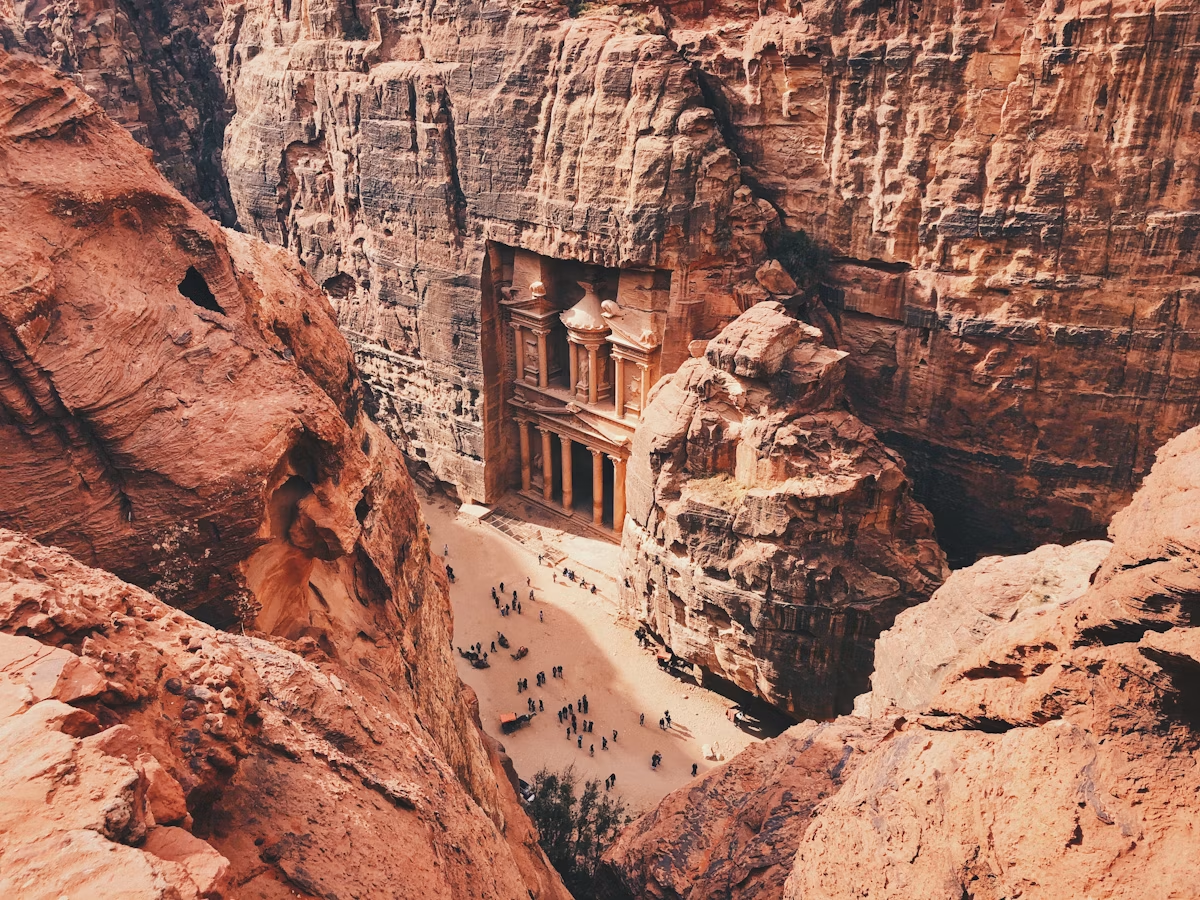
The walk into Petra begins through the Siq, a narrow sandstone canyon over a kilometer long where the walls rise dozens of meters on either side, opening suddenly onto the Treasury — Petra’s most iconic facade, carved directly into a sheer rock face around the 1st century BC. Most first-time visitors describe the moment the Siq opens onto the Treasury as the single most striking arrival of any historic site they’ve seen.
Visiting at dawn, before tour groups arrive, or joining the “Petra by Night” candlelit tour offered several evenings a week both offer dramatically different views of the same facade.
The Monastery Hike and Beyond
Beyond the Treasury, the site opens into a wide valley lined with tombs, a Roman-style theater, and a colonnaded street, eventually leading to the trail up to the Monastery — a facade even larger than the Treasury, reached by climbing roughly 800 rock-cut steps. The climb takes most visitors 45 minutes to an hour each way, but the relative quiet at the top, compared to the crowds around the Treasury, makes it worth the effort.
Local Bedouin guides and donkey or camel rides are available for parts of the route for visitors who prefer not to walk the entire site on foot.
Day Trips and Side Excursions
Wadi Rum Desert (1.5 hours by car from Petra)
A vast red-sand desert of towering rock formations, explorable by 4×4 tour or overnight in a Bedouin desert camp.
Little Petra / Siq al-Barid (20 minutes by car)
A smaller, quieter Nabataean site with its own carved facades, far less crowded than the main Petra complex.
Dana Biosphere Reserve (1 hour by car)
Jordan’s largest nature reserve, offering hiking trails through a dramatic rift valley landscape.
Food Near Petra
Food around Petra centers on Jordanian and Bedouin staples, often served at restaurants in nearby Wadi Musa town.
- Mansaf: Jordan’s national dish — lamb cooked in a fermented dried-yogurt sauce served over rice, often eaten with the hands. 8–14 JOD
- Maqluba: An “upside-down” dish of rice, meat, and fried vegetables, flipped tableside before serving
- Zarb: A Bedouin-style meal of meat and vegetables slow-cooked underground, often featured at Wadi Rum desert camps
- Fresh hummus and falafel: Widely available at casual restaurants in Wadi Musa near the Petra entrance
- Jordanian mint tea: Served throughout the day, often offered by Bedouin stall owners along the trail to the Monastery
Where to Stay
Budget (20–35 JOD/night)
Hostels and budget guesthouses in Wadi Musa, a short walk or taxi ride from the Petra entrance.
Mid-Range (45–90 JOD/night)
Hotels near the visitor center with views toward the surrounding hills — the standard Petra travel guide accommodation tier.
Upscale (120–300+ JOD/night)
Higher-end hotels in Wadi Musa or Bedouin-style luxury desert camps near Wadi Rum.
Getting Around Petra
Walking: The site itself is explored entirely on foot, with the Treasury, Monastery, and side trails covering significant distance.
Taxis: Connect Wadi Musa town to the Petra entrance and to Little Petra.
Organized tours: The most common way to reach Wadi Rum and arrange a 4×4 desert excursion or overnight camp stay.
Daily Budget Breakdown
| Category | Frugal | Comfortable |
|---|---|---|
| Accommodation | 18 JOD | 60 JOD |
| Food | 12 JOD | 30 JOD |
| Entry fees and tours | 20 JOD (single-day Petra ticket) | 50 JOD |
| Transport | 5 JOD | 20 JOD |
| Daily Total | ~55 JOD / $78 | ~160 JOD / $226 |
Final Verdict: Petra Travel Guide 2026
Petra rewards two full days, since the site is large enough that the Treasury, the Monastery hike, and the quieter side trails cannot comfortably fit into a single rushed visit. The ideal Petra travel guide itinerary spends a first day walking the Siq to the Treasury and through the main valley to the Roman theater, a second day hiking up to the Monastery and exploring Little Petra, and an additional day or overnight trip to Wadi Rum for those with extra time. Travelers visiting in summer should start at the site entrance as early as it opens, since the Siq and open valley offer almost no shade once the sun climbs higher.