
Munich travel guide readers usually arrive expecting Oktoberfest beer tents and leave having discovered a city that pairs that famous Bavarian beer culture with grand royal palaces, world-class museums, and some of the easiest Alpine day trips of any major European city. Munich, the capital of Bavaria, balances a compact, walkable historic core around Marienplatz with a surprising amount of green space along the Isar River, all while sitting less than two hours from the Alps themselves. This Munich travel guide covers the historic center, beer culture, Bavarian palaces, day trips, food, and a full budget breakdown for 2026.
At a Glance
| Country | Germany |
| Currency | Euro (EUR) |
| Language | German; English widely spoken in tourist areas |
| Best time | May–June and September (mild weather, fewer crowds than Oktoberfest) |
| Avoid | Late September–early October unless attending Oktoberfest (prices spike, rooms sell out) |
| Daily budget (frugal) | $50–$70/day |
| Daily budget (comfortable) | $80–$180/day |
| Visa | Visa-free for 90 days for US, UK, Canadian, and most non-EU passport holders under the Schengen rules |
| Getting there | Munich Airport has direct flights from most major global hubs |
| Getting around | Walking the historic center, U-Bahn and S-Bahn trains, trams |
Marienplatz and the Historic Center
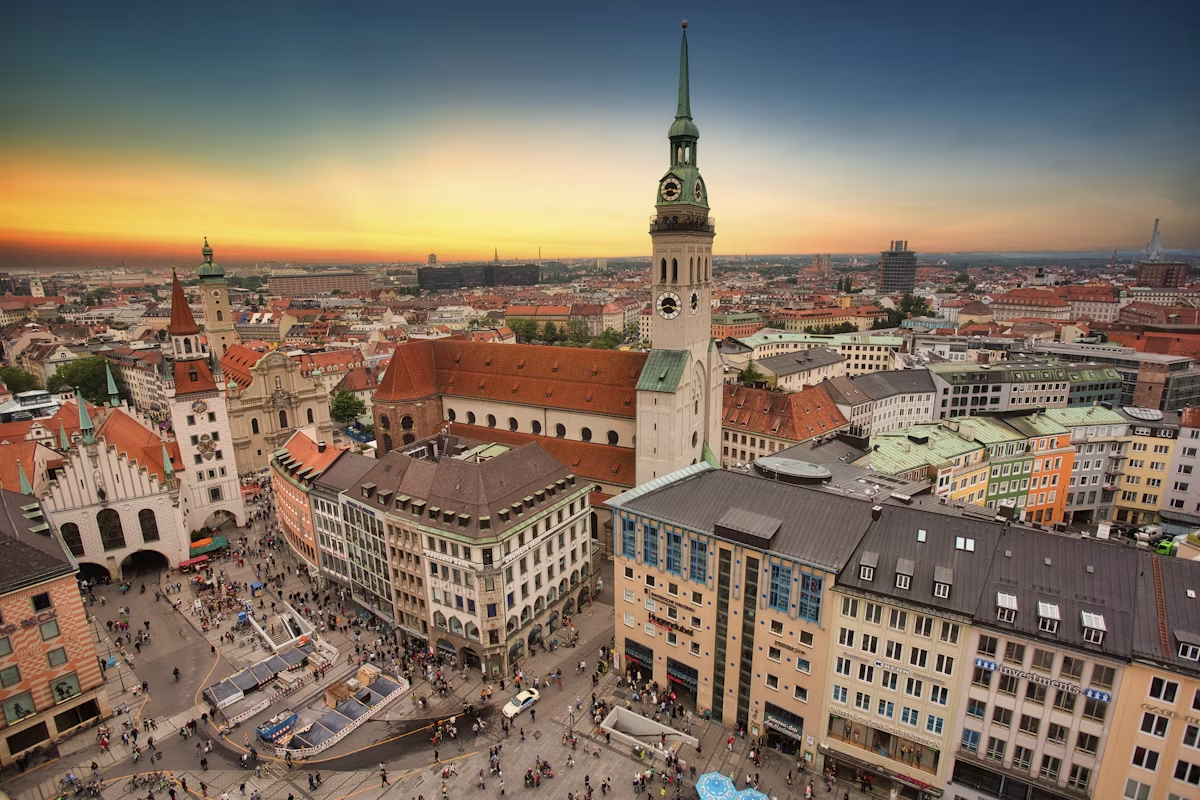
Marienplatz, Munich’s central square, anchors the old town with the neo-Gothic New Town Hall and its glockenspiel clock, which performs a small mechanical show twice daily to a crowd of onlookers below. The nearby Frauenkirche, with its twin onion-domed towers, has served as the city’s visual symbol since the 15th century and offers panoramic views from its tower for those willing to climb.
Just steps from Marienplatz, the Viktualienmarkt food market has operated since the early 1800s, selling Bavarian cheeses, sausages, and produce alongside a popular beer garden shaded by chestnut trees.
Beer Halls and Bavarian Palaces
Munich’s beer hall culture runs far deeper than Oktoberfest, with year-round institutions like the Hofbräuhaus serving liter steins of Bavarian beer in a centuries-old hall, and dozens of beer gardens across the city filling with locals on warm afternoons. The Nymphenburg Palace, a sprawling Baroque summer residence of the former Bavarian royal family, sits just outside the city center with formal gardens and a porcelain factory still operating on the grounds.
The Residenz, the former royal palace in the heart of downtown, holds one of Europe’s most extensive palace museums, its Antiquarium hall ranking among the largest Renaissance interiors anywhere in the world.
Day Trips from Munich
Neuschwanstein Castle (2 hours by train and bus)
Bavaria’s fairy-tale castle and the inspiration for Disney’s own version, reachable as a long but very doable day trip from Munich.
Dachau Memorial Site (30 minutes by train)
The former concentration camp, now a memorial and museum, an essential and somber stop for many visitors to the region.
Zugspitze and the Bavarian Alps (2 hours by train)
Germany’s highest peak, reachable by cogwheel train and cable car for panoramic Alpine views without any technical climbing required.
Food in Munich
Munich’s food scene centers on hearty Bavarian dishes built around pork, potatoes, and bread, best paired with the local beer styles brewed under the city’s strict purity standards.
- Weisswurst: A pale veal-and-pork sausage traditionally eaten before noon with sweet mustard and a pretzel. €6–€10
- Schweinsbraten: Roast pork with a rich gravy and bread dumplings, a staple at nearly every traditional Wirtshaus
- Pretzels and Obatzda: A soft pretzel served with a tangy cheese-and-beer spread, common beer garden fare
- Beer garden classics: Roast chicken and radish salad, ordered alongside liter steins at any of the city’s large outdoor beer gardens
- Viktualienmarkt stalls: A good spot for sampling multiple regional specialties in smaller portions
Where to Stay
Budget (€30–€55/night)
Hostels and budget hotels near the main train station, a short walk or U-Bahn ride from the old town.
Mid-Range (€70–€140/night)
Hotels in or near the historic center close to Marienplatz — the standard Munich travel guide accommodation tier.
Upscale (€180–€400+/night)
Five-star properties near the Residenz or along the upscale Maximilianstrasse shopping street.
Getting Around Munich
Walking: The old town around Marienplatz is fully walkable and the city’s most efficient way to see the main sights.
U-Bahn and S-Bahn: Munich’s subway and suburban rail network covers the wider city and connects easily to the airport.
Trains and buses: The most practical way to reach Alpine day trips like Neuschwanstein or Zugspitze without a rental car.
Daily Budget Breakdown
| Category | Frugal | Comfortable |
|---|---|---|
| Accommodation | €30 | €100 |
| Food | €20 | €50 |
| Transport | €8 | €20 |
| Activities (museums, palaces, beer halls) | €10 | €40 |
| Daily Total | ~€68 / $74 | ~€210 / $228 |
Final Verdict: Munich Travel Guide 2026
Munich rewards three to four days, since the historic center, at least one major palace, and one Alpine day trip each deserve their own dedicated stretch of time. The ideal Munich travel guide itinerary spends a day around Marienplatz and the Viktualienmarkt, a day at Nymphenburg Palace and the Residenz, and a full day on an Alpine excursion to Neuschwanstein or Zugspitze before an optional final evening in a classic beer hall. Travelers planning a visit specifically for Oktoberfest should book accommodation many months in advance, since prices and demand both spike sharply during the festival weeks.