
Lalibela travel guide readers usually expect a single famous church and discover instead an entire complex of eleven monolithic structures carved downward into solid volcanic rock, still active places of worship eight centuries after Ethiopian monks first cut them from the mountain. Lalibela, a small highland town in northern Ethiopia, holds one of the most extraordinary religious sites on earth — churches not built upward from foundations but excavated straight down into the bedrock, connected by a maze of tunnels and trenches that pilgrims and tourists alike still walk barefoot today. This Lalibela travel guide covers the rock-hewn churches, the surrounding highland villages, festivals, food, and a full budget breakdown for 2026.
At a Glance
| Country | Ethiopia |
| Currency | Ethiopian Birr (ETB) |
| Language | Amharic; English common at tourist businesses |
| Best time | October–March (dry season, cooler highland temperatures) |
| Avoid | June–September (heavy monsoon rains, slippery rock-cut walkways) |
| Daily budget (frugal) | $20–$30/day |
| Daily budget (comfortable) | $35–$90/day |
| Visa | E-visa required for most nationalities, arranged in advance |
| Getting there | Lalibela has a small domestic airport with daily flights from Addis Ababa (1 hour); overland travel takes 1–2 days on rough roads |
| Getting around | Walking between church clusters, guided highland village hikes |
The Rock-Hewn Churches
Lalibela’s eleven churches divide into a Northern Cluster, a Southern Cluster, and the isolated Church of Saint George, each carved entirely from a single piece of red volcanic rock rather than assembled from blocks. Bete Giyorgis, the Church of Saint George, is the most photographed of the group, cut in the shape of a perfect cross and sunk so deep into the ground that visitors approach it from above before descending into the trench surrounding it.
A network of tunnels, some lit only by narrow rock-cut windows, connects several of the churches underground, originally designed to let pilgrims move between sacred sites without crossing back into the open town above.
Highland Villages Around Lalibela
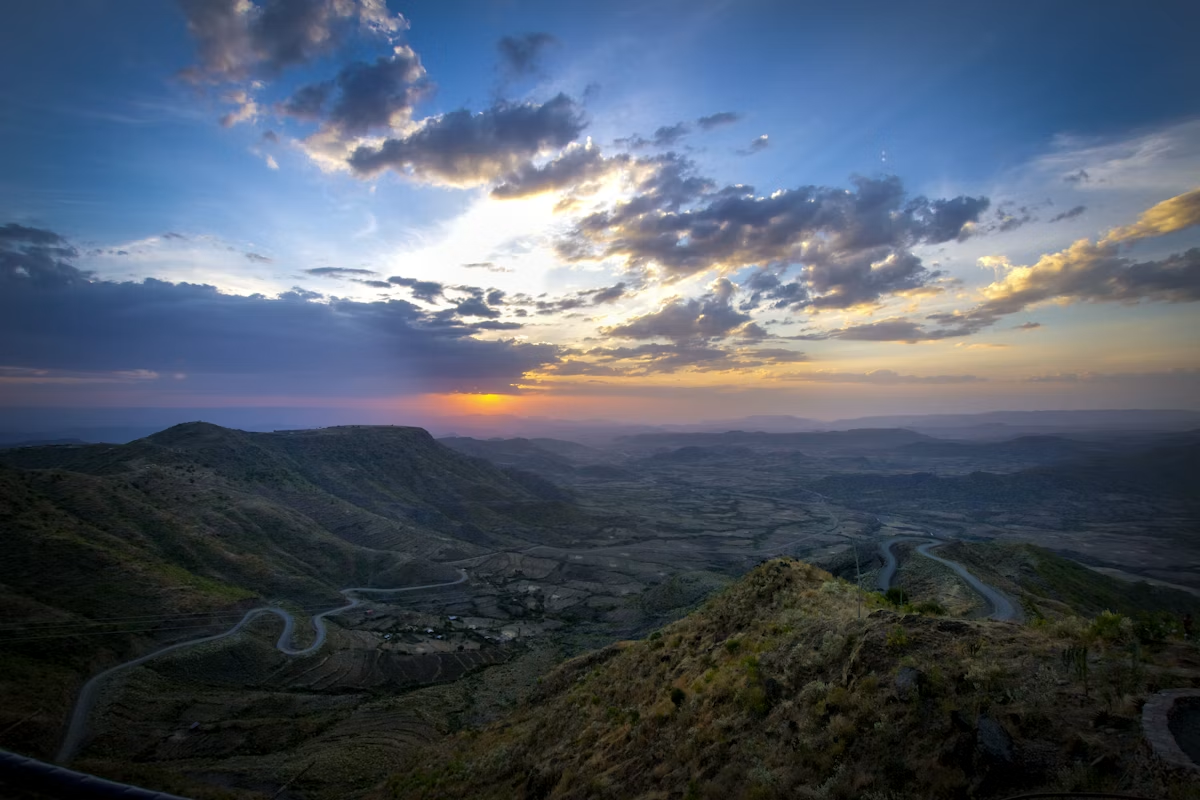
Beyond the church complex, Lalibela sits amid a dramatic highland landscape of terraced farmland and stone-and-thatch village houses, reachable on guided day hikes from town. These hikes typically pass through small communities where farming methods have changed little in generations, offering a quieter counterpoint to the church complex’s steady stream of pilgrims and tour groups.
Several of the surrounding villages also hold their own smaller rock-hewn or cave churches, far less visited than the main eleven but often included on longer guided treks for travelers staying more than two nights.
Festivals and Day Trips Around Lalibela
Timkat (Ethiopian Epiphany, mid-January)
Lalibela’s biggest festival, drawing thousands of white-robed pilgrims to the churches for processions and overnight vigils — the single best time to witness the site’s living religious significance.
Asheton Maryam Monastery (half-day hike)
A clifftop monastery reached by a steep highland trail, rewarding hikers with sweeping views over the valley below Lalibela.
Yemrehana Krestos Church (half-day by car)
A cave-built church predating Lalibela’s main complex, constructed from wood and stone rather than carved rock, located in a mountain cave outside town.
Food in Lalibela
Lalibela’s food scene centers on traditional Ethiopian highland cuisine, much of it shaped by the long fasting calendar observed by the Ethiopian Orthodox Church.
- Injera with wat: Sourdough flatbread served with spiced meat or vegetable stews, the staple meal across the highlands. 100–150 ETB
- Fasting platters: Vegetarian combination plates served on fasting days, widely available given the town’s religious character
- Ethiopian coffee ceremony: A traditional roasting-and-brewing ritual offered at many guesthouses and cafés
- Tej: A honey wine served at local bars, a common accompaniment to highland meals
- Highland barley dishes: Local grains feature heavily in Lalibela’s simpler village-style cooking
Where to Stay
Budget ($10–$20/night)
Guesthouses near the church complex entrance, an easy walk from all three clusters.
Mid-Range ($25–$50/night)
Hillside lodges with valley views — the standard Lalibela travel guide accommodation tier.
Upscale ($70–$150+/night)
A small number of higher-end properties set on the surrounding hills with panoramic highland views.
Getting Around Lalibela
Walking: The church clusters and town center are compact enough to cover on foot, though the rock-cut walkways require sturdy shoes.
Guides: Strongly recommended for the churches and essential for highland village hikes, easily arranged through guesthouses.
Domestic flights: The most practical way to reach Lalibela given the rough overland road conditions from Addis Ababa or Gondar.
Daily Budget Breakdown
| Category | Frugal | Comfortable |
|---|---|---|
| Accommodation | 600 ETB | 2,800 ETB |
| Food | 400 ETB | 1,400 ETB |
| Guide/entry fees | 300 ETB | 1,200 ETB |
| Transport | 200 ETB | 800 ETB |
| Daily Total | ~1,500 ETB / $27 | ~6,200 ETB / $110 |
Final Verdict: Lalibela Travel Guide 2026
Lalibela deserves at least two full days, since the eleven churches alone take a full day to see properly and most travelers add a half-day highland hike or a visit to an outlying monastery. The ideal Lalibela travel guide itinerary spends one day moving through the Northern and Southern Clusters with a knowledgeable local guide, a second day at Bete Giyorgis at sunrise followed by a highland village walk, and an optional half-day trip to Asheton Maryam or Yemrehana Krestos for travelers staying longer. Anyone able to time a visit around Timkat in mid-January should plan well ahead, since accommodation fills quickly during the festival.