
Merida travel guide readers usually picture Cancun-style beach crowds when they think of Yucatan, then arrive in this colonial capital and find pastel mansions, a colorful main plaza, and a noticeably calmer pace than the resort towns two hours east. Merida, the largest city in the Yucatan Peninsula, pairs centuries-old Spanish colonial architecture with easy access to cenotes, Mayan ruins, and white-sand Gulf coast beaches, all while ranking among the safest and most walkable cities in Mexico. This Merida travel guide covers the colonial center, nearby cenotes, day trips, food, and a full budget breakdown for 2026.
At a Glance
| Country | Mexico |
| Currency | Mexican Peso (MXN) |
| Language | Spanish; Yucatec Maya also spoken; English common in tourist areas |
| Best time | November–February (cooler, drier, comfortable for walking) |
| Avoid | May–June (extreme heat and humidity before the rainy season) |
| Daily budget (frugal) | $25–$40/day |
| Daily budget (comfortable) | $45–$110/day |
| Visa | Visa-free for 180 days for US, Canadian, UK, and most EU passport holders |
| Getting there | Merida International Airport has direct flights from major US hubs and Mexico City |
| Getting around | Walking the historic center, taxis, ride-hailing apps, colectivos for day trips |
The Colonial Center
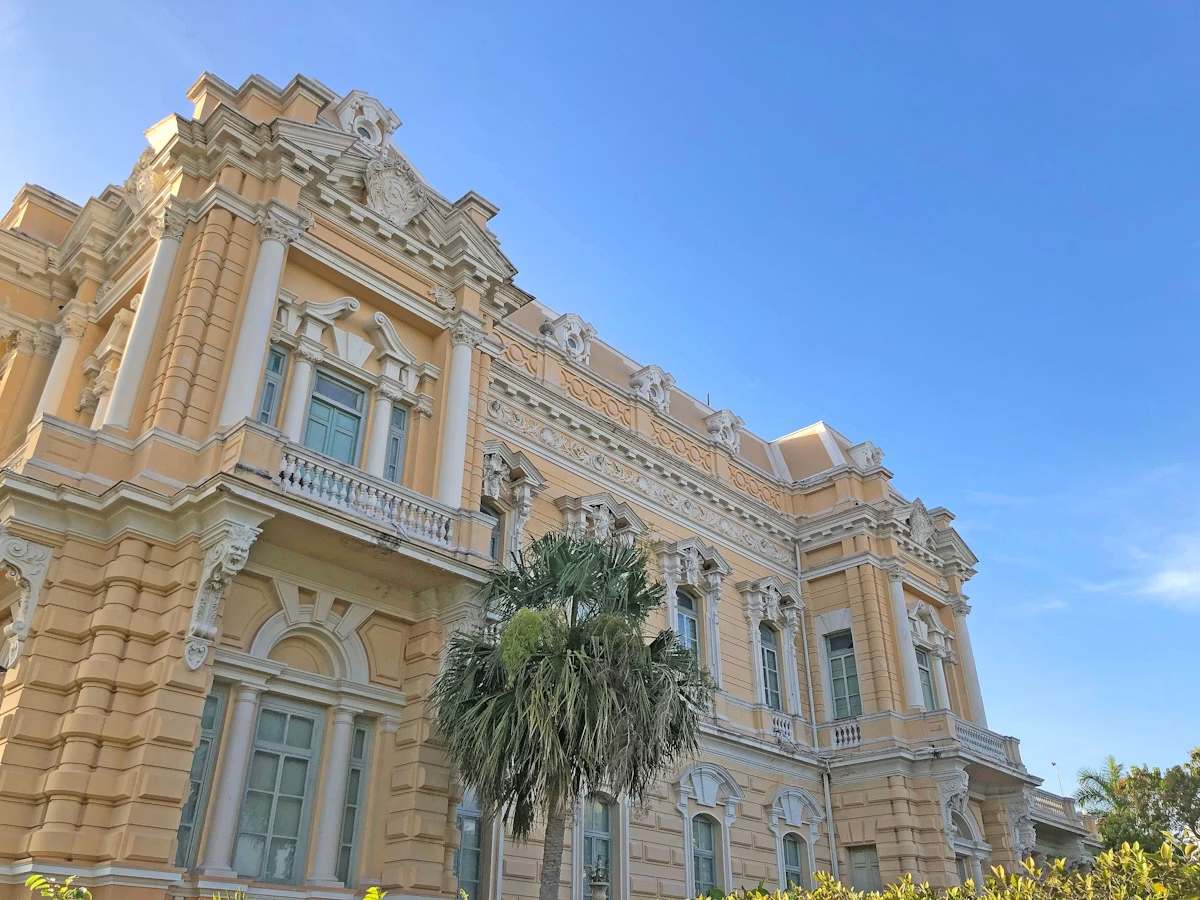
Merida’s historic center radiates out from the Plaza Grande, a tree-shaded main square ringed by a 16th-century cathedral, the governor’s palace, and pastel-painted colonial mansions built on fortunes from the regional henequen trade. The Paseo de Montejo, a wide tree-lined avenue modeled on the Champs-Élysées, runs north from downtown past a string of restored French-style mansions, several now converted into museums or boutique hotels.
Weekend evenings bring the city to life with free cultural events — folk dance performances on the plaza, a Sunday street market closing off downtown streets to traffic, and live music spilling out of bars along Calle 60.
Cenotes Near Merida
The Yucatan’s limestone bedrock is riddled with cenotes — natural sinkholes filled with crystal-clear groundwater — and a cluster of the most accessible ones sits within an hour of Merida along the Cuzama and Homun routes. Many cenotes near Merida are reached by horse-drawn cart over old henequen-railway tracks, a slower but distinctly regional way to visit several swimming holes in a single outing.
Travelers with less time often choose a single well-developed cenote closer to the city rather than the full multi-cenote circuit, which can take most of a day once travel time is included.
Day Trips from Merida
Uxmal and the Puuc Route (1 hour by car)
A Mayan ruin site rivaling Chichen Itza in scale but with a fraction of the crowds, anchored by the striking Pyramid of the Magician.
Izamal, the “Yellow City” (1 hour by car)
An entire colonial town painted bright yellow, built around a Franciscan monastery atop an ancient Mayan platform.
Celestun Biosphere Reserve (1 hour by car)
A coastal wetland reserve known for its flamingo colonies, reachable as a half-day or full-day trip from the city.
Food in Merida
Merida sits at the heart of Yucatecan cuisine, a distinct regional tradition shaped by Mayan ingredients and Spanish, Lebanese, and French influences from the city’s immigration history.
- Cochinita pibil: Pork slow-roasted in achiote and citrus, wrapped in banana leaves — the signature dish of the region. 80–150 MXN
- Sopa de lima: A light lime-and-turkey soup found on nearly every traditional menu in the city
- Marquesitas: Crispy folded crepes filled with cheese and Nutella, sold from street carts in the evenings
- Lebanese-Yucatecan dishes: A legacy of Merida’s Lebanese immigrant community, found at several long-running downtown restaurants
- Mercado Lucas de Galvez: The city’s main market, good for cheap regional lunches and fresh tropical fruit
Where to Stay
Budget ($15–$30/night)
Hostels and guesthouses in the historic center, walking distance from the Plaza Grande.
Mid-Range ($35–$70/night)
Restored colonial boutique hotels with interior courtyards — the standard Merida travel guide accommodation tier.
Upscale ($90–$200+/night)
High-end mansion hotels along the Paseo de Montejo with pools and full spa services.
Getting Around Merida
Walking: The historic center is flat, compact, and shaded enough to cover comfortably on foot most of the year.
Ride-hailing apps: Widely available and affordable for trips beyond walking distance or to the bus terminals.
Colectivos and rental cars: The most practical ways to reach cenotes and the Puuc Route ruins outside the city.
Daily Budget Breakdown
| Category | Frugal | Comfortable |
|---|---|---|
| Accommodation | 400 MXN | 1,400 MXN |
| Food | 250 MXN | 700 MXN |
| Transport | 100 MXN | 400 MXN |
| Activities (cenotes, ruins, museums) | 150 MXN | 600 MXN |
| Daily Total | ~900 MXN / $50 | ~3,100 MXN / $170 |
Final Verdict: Merida Travel Guide 2026
Merida rewards three to four days, since the colonial center, at least one cenote outing, and a single major day trip each deserve their own unhurried block of time. The ideal Merida travel guide itinerary spends a day exploring the Plaza Grande and Paseo de Montejo, a day at the Cuzama or Homun cenotes, and a day at Uxmal or Izamal before an optional final day relaxing or shopping at the Sunday street market. Travelers visiting between May and June should plan outdoor activities for early morning, since the heat and humidity peak well before midday in the weeks ahead of the rainy season.